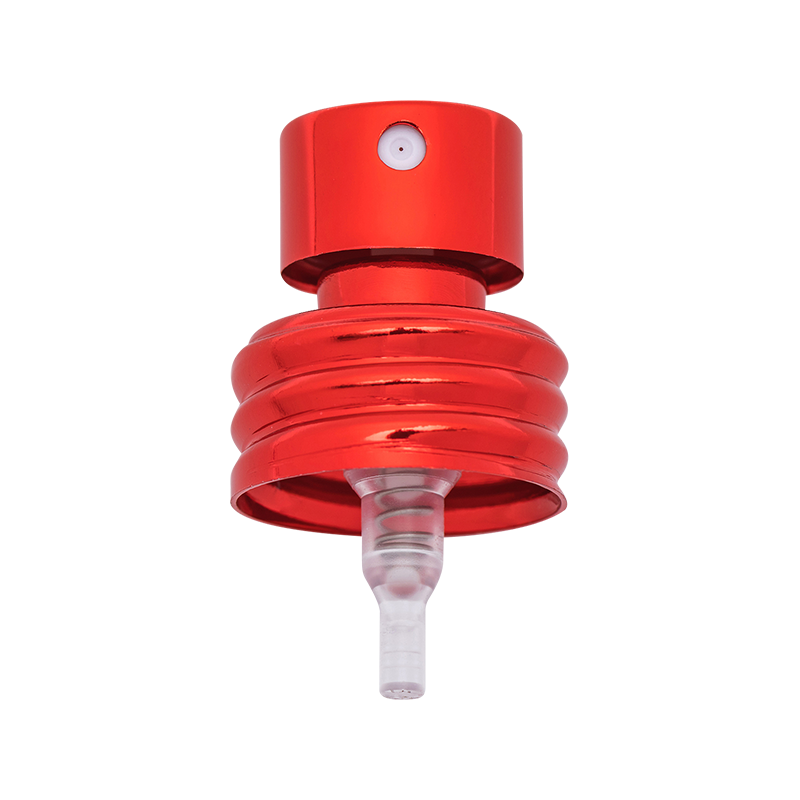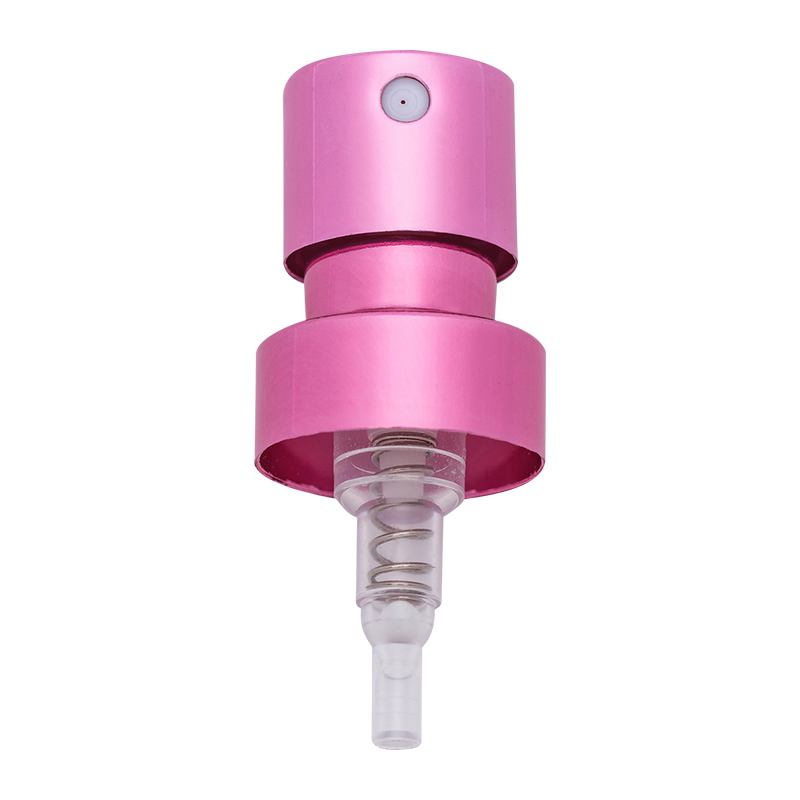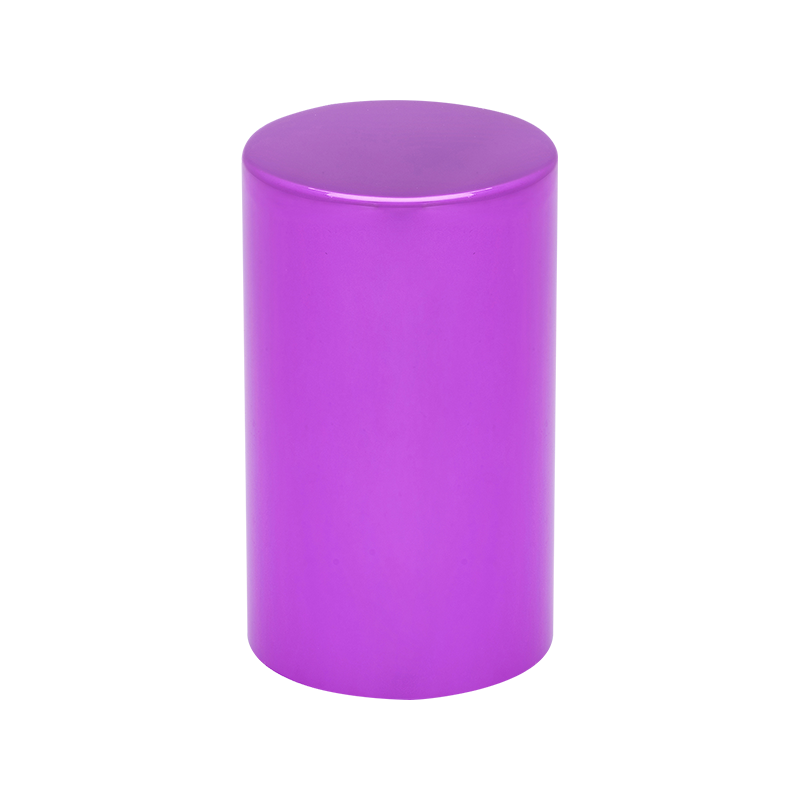
For premium cosmetic and fragrance brands, the consumer experience begins with the tactile feel and visual quality of the spray. The ** 13/415 perfume pump ** is a small component with an enormous technical challenge: delivering an exact, consistent dose of liquid as a perfectly atomized mist. Achieving this level of precision requires sophisticated engineering in the pump's internal mechanics and the nozzle design, verified by rigorous testing focused on Consistency in 13/415 pump dosage output and Particle Size Distribution (PSD).
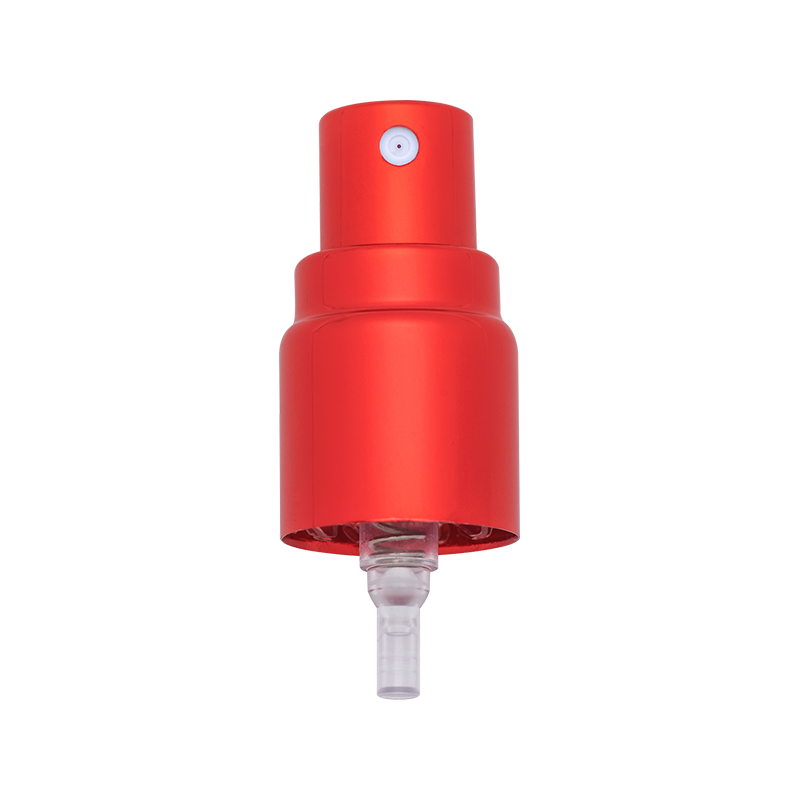
XY-LK-13/415 13mm Screw perfume fine mist pump sprayer
The dosage output, measured in microliters (uL), must remain constant throughout the pump's lifespan to guarantee product longevity and a repeatable user experience.
Gravimetric testing is the primary quality control method. Pumps are actuated multiple times, and the mass of the dispensed liquid is measured and converted to volume (using the known density of the perfume base). Reputable manufacturers demand a coefficient of variation (CV) of less than 3% across consecutive actuations to ensure stable delivery.
| Pump Type | Target Output (uL) | Required CV (Coefficient of Variation) |
|---|---|---|
| Standard Pump (Mass Market) | 100 uL 10% / - 10% | 5.0% CV |
| High-Precision Pump (Premium/Fine Mist) | 100 uL 3% / - 3% | < 3.0% CV (Critical for Consistency in 13/415 pump dosage output ) |
The perceived quality of a perfume pump is largely determined by the fineness and softness of the mist, which is quantified by Particle Size Distribution (PSD).
The Dv50 (or VMD) is the droplet diameter at which 50% of the total spray volume is composed of droplets smaller than this size. For a desirable fine mist, the Dv50 should typically be below 50 micrometers. Larger droplets (higher Dv50) lead to a coarser, cold, and wet sensation on the skin, demonstrating why Perfume pump particle size distribution testing is a technical requirement for premium brands.
The nozzle is where the pressurized liquid is converted into mist, making its design paramount to spray quality.
Beyond the nozzle, Factors affecting mist uniformity in perfume pump include the actuation force and the spray angle (or cone angle). A consistent actuation force ensures the internal pressure is stable, while the spray angle (typically 40 degrees to 60 degrees) defines the coverage area and must be free from large droplets (streamers) or holes within the pattern.
Final quality control involves visual and quantitative assessment of the spray pattern geometry.
A high-quality **13/415 perfume pump** requires a low, smooth actuation force (e.g., 5-10 N) that does not compromise the spray pattern. If the actuation force is too high, consumers may hesitate, resulting in a partial stroke and a non-ideal spray pattern that fails the Quantitative analysis of perfume spray pattern .
Zhangjiagang XinYe Chemical Sprayer Co., Ltd., founded in 2006, is a leader in perfume sprayer production, operating three production bases totaling 250,000 square meters of construction area. With over 600 dedicated employees, including specialists in quality management and technology development, we view product quality as our life source. We employ advanced full-auto production and inspection equipment to ensure every **13/415 perfume pump** meets stringent global standards. Our complete production chain, from aluminum stamping and injection molding to automated assembly, ensures superior control over the critical components that define dosage and mist quality. We adhere to the ISO9001-2008 quality system certification, sticking to our commitment of ensuring quality for survival and persistence for distinction. Our expertise ensures precise Nozzle orifice design for fine mist 13/415 pump and unparalleled Consistency in 13/415 pump dosage output , cementing our position as a globally renowned supplier.
The standard dosage output for a 13/415 pump typically ranges from 50 uL to 140 uL per full stroke, though high-precision pumps aim for a coefficient of variation (CV) under 3% for excellent Consistency in 13/415 pump dosage output .
The fineness is assessed through Perfume pump particle size distribution testing using Laser Diffraction Analysis (LDA), which calculates the Mean Volume Diameter (Dv50). Premium sprays target a Dv50 below 50 micrometers.
The swirl chamber imparts rotational velocity to the liquid just before the nozzle orifice. This forces the liquid into a thin, destabilized film as it exits, ensuring it breaks up into a uniform, fine mist rather than large, wet droplets.
Key factors include the precision of the nozzle orifice, the integrity of the swirl chamber, the stability of the actuation force, and the resulting spray angle, all of which are verified through Quantitative analysis of perfume spray pattern .
A low CV (ideally below 3%) ensures that the consumer receives the exact same amount of fragrance with every single press, providing a consistent and high-quality sensory experience, and guaranteeing the product's advertised usage life.
Tel: +86-13812990918
Phone: +86-512-58962260
Address: No.3, Xiangqun Road, Leyu, จางเจียกัง